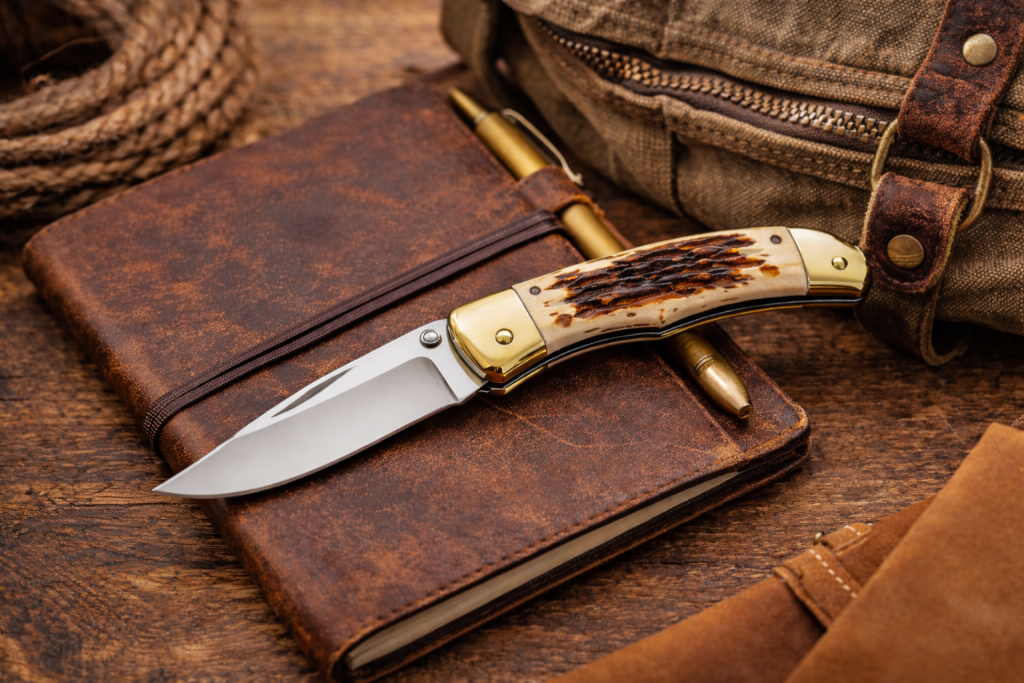
I’ve been asked to take a closer look at traveling with a knife, because it’s one of those questions that comes up more often than you’d expect. It sits in that grey zone between useful tool and potential problem. Unlike most travel gear, a knife carries legal, cultural, and practical considerations that go well beyond weight and utility. In some situations, it’s genuinely helpful. In others, it’s simply not worth the risk.
When a Knife Is Actually Useful
For most everyday travel tasks, a knife can be useful in simple ways. Cutting fruit or food on the go. Opening packaging. Light utility work around a campsite or hostel. It’s not something you’ll use constantly like a flashlight, but when you need it, it can be very handy. That said, most of these problems can also be solved in other ways, which is why a knife sits firmly in the “optional” category for most trips.
Your travel style also plays a role. In urban environments, the utility of a knife is fairly limited, while the potential for unwanted attention is higher. In outdoor or mixed travel, especially where food prep or basic campsite tasks are involved, the case for carrying one becomes stronger. As with most gear, context matters.
Know the Rules
Before anything else, you need to understand that knife laws vary widely depending on where you are. What’s perfectly legal at home may be restricted or prohibited somewhere else. Laws can differ by country, province or state, and sometimes even by city. Enforcement can also be inconsistent and often comes down to discretion. The short version is simple. If you’re going to pack a knife while traveling, you are responsible for understanding the rules where you are.
The rule for air travel is simple and straightforward. Knives are not allowed in carry-on baggage under any circumstances. Even the smallest pocketknife will be confiscated at security. If you want to travel with a knife, it must go in checked baggage, which defeats the purpose of lightweight travel. If you’re traveling carry-on only, you’re not bringing a knife. That decision has already been made for you.
Border crossings are where things can get unpredictable. Even if a knife is technically legal, border agents have broad discretion in how they interpret and handle it. At best, it may trigger a few questions. At worst, it can lead to delays, secondary inspection, or confiscation. The safest approach is to avoid anything that looks tactical, aggressive, or designed as a weapon. When in doubt, less is more. The more a knife looks like a simple backpacker’s utility tool, the more likely it is to get across a land border without issue.
Honestly, I have never personally had a problem getting a simple folding knife through a land border crossing, but I have spoken to others who did experience some questions and even confiscation.
There are also places where carrying a knife is simply not appropriate, regardless of legality. Airports, government buildings, courthouses, events, bars, and anywhere with security screening are all obvious examples. If there’s a metal detector involved, the answer is no. Even in places where it might be technically allowed, it’s rarely worth the hassle.
Cultural perception is another piece of the puzzle. In some parts of the world, a small knife is a normal everyday tool. In others, it raises immediate concern. Countries like the UK and Japan tend to have stricter attitudes and enforcement. The general rule is to blend into local norms rather than relying on what feels normal at home.
Keep It Simple
One factor that matters more than people expect is purpose. A small knife used for cutting food or opening packaging is typically seen as a tool. The exact same knife carried for “protection” may be interpreted very differently. In some jurisdictions, intent plays a role in how laws are applied. In all cases, perception matters. A tool is practical. A weapon invites scrutiny.
If you do choose to pack a knife, keep it simple. Small folding knives with short blades are generally the least problematic option. Designs that clearly read as tools rather than weapons tend to attract less attention and fewer questions. Large blades, fixed knives, or anything with a tactical appearance are far more likely to create issues than they are to solve problems. Frankly, they are also of less value on the road. Trying to spread butter on some local bakery’s delicious bread with your double-edged Rambo knife is hilarious, but pointless.
There are also simple alternatives worth considering. Small scissors, blade-less multitools, or just buying a cheap knife locally and discarding it before you leave can solve most of the same problems without the added complexity of carrying one across borders. In many cases, this is the cleaner solution.
The 8KGap Filter
From an 8KGap perspective, the question is straightforward. Does this item earn both its weight and its risk? For most international travel, the answer is probably no. This is doubly true for travel where you will be regularly hopping flights to your next destination. For land travel with planned outdoor adventures, or when you plan to be in-country for an extended period, it may be yes. The key is being intentional about the decision rather than defaulting to habit.
A Simple Recommendation
If you do decide to carry a knife, I tend to recommend simple, working tools. The kind used by tradespeople or for everyday utility tasks. Nothing flashy, nothing tactical, nothing that tries to be more than it needs to be.
A good example is the Opinel No. 8. It’s inexpensive but high quality, mechanically simple, and very durable. It’s small, lightweight, and widely available. More importantly, it has a very non-threatening design. It looks exactly like what it is: a simple tool, and that matters more than most people realize. Opinel knives have been around since the 1890s, proving themselves worldwide for well over a century with explorers, travelers, and anyone else who needs a small, discreet, and reliable knife. It’s also a design that many police and border agents have seen countless times in travelers’ packs, which tends to work in your favor.
The Bottom Line
The most common mistake is buying too large a pack “just in case.” A bigger bag will not give you more freedom; it will only encourage you to carry things you do not need. Another trap is choosing style over function. A sleek design or flashy color might look good on the shelf but will not matter when you are hauling it up a hostel staircase at 3:00 a.m.
Do not ignore the empty weight of the bag. A heavy pack right out of the box steals precious kilograms from your limit before you have packed a single shirt. And never rely on external straps for valuables or essentials. Items clipped to the outside are magnets for theft, and they are the first things to get lost when you are on the move.
At the end of the day, a knife can be a useful piece of travel gear, but it comes with trade-offs that most items don’t. Legal considerations, cultural differences, and practical realities all come into play. For some trips, it makes sense. For others, it doesn’t.
A good rule of thumb is simple. If you have to think twice about bringing a knife on a trip, you probably don’t need it.