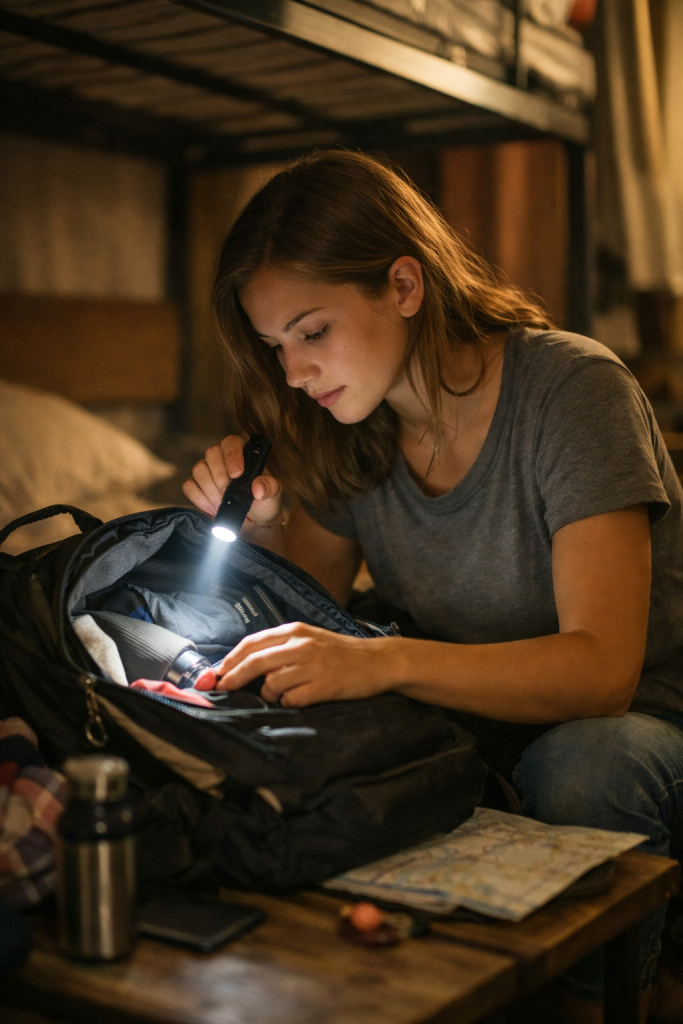
I wanted to take a deeper look at travel flashlights. More than a nice-to-have, they’re genuinely a must-have piece of gear. Other than clothing and maybe your smartphone, a small flashlight is probably the tool you’ll reach for most often during a long trip. Travel flashlights solve dozens of small problems that pop up on the road. They weigh almost nothing, cost very little, and quietly earn their place in your pack every single day. In the world of lightweight travel gear, that’s an excellent trade.
Most of the uses for travel flashlights are simple, but they happen constantly. Finding something buried in the bottom of your backpack. Moving around a hostel late at night when everyone else is asleep. Reading maps after dark. Reading in a dorm room without turning on the overhead lights. Finding the bathroom in a strange building at 3 AM. Checking your gear in a campsite. Walking unfamiliar streets at night. None of these tasks require a massive tactical light, but they absolutely require a small reliable flashlight that’s always within reach.
How Many Lumens Do You Need?
Lumens measure total light output, and it’s the easiest flashlight specification to understand. Higher lumens mean a brighter beam. But brighter isn’t always better. High-output flashlights drain batteries quickly, and you definitely don’t want to be blasting around with a laser death ray when navigating a quiet hostel dorm while other travelers are trying to sleep.
For travel flashlights, I usually recommend the 100–300 lumen range. That’s bright enough to handle almost anything you’ll realistically need to do while traveling. It’s powerful enough for navigating dark streets, campsites, and hostel hallways, but not so bright that you blind everyone around you or chew through batteries.
Look for travel flashlights with multiple brightness modes, so you can run a low setting for reading or moving quietly around a dorm room, and a higher setting when you need more light. Some flashlights also include a red-light mode, which is excellent for preserving night vision and moving around shared spaces without waking everyone up.
Batteries vs Rechargeable Lights
When it comes to power, AA or AAA batteries are usually the best choice for travel flashlights. The one exception is if a rechargeable flashlight can use the same charging cable as your phone, because minimizing cables matters when you’re living out of a backpack.
A lower-lumen flashlight will sip power, so even with regular use you may only need to change batteries a couple of times a year. AA and AAA travel flashlights are also less expensive when you’re first setting out and much easier to replace if one gets lost or broken while traveling.
Replacement batteries are available almost everywhere on earth, from major cities to tiny roadside shops. They weigh almost nothing, so carrying a spare set in your pack adds virtually no weight while giving you complete peace of mind.
Choosing the Right Size
Size matters when it comes to travel gear, and flashlights are no exception. Stick with a pocket-sized EDC flashlight that’s small, powerful, and easy to carry. Something around the 100-gram range or lighter is ideal.
Travel is a full-contact sport for your gear, so durability matters more than fancy features. Your flashlight will eventually get dropped, rained on, and bounced around inside your backpack. Look for travel flashlights built with aluminum bodies, along with both water resistance and shock resistance.
Cheap plastic flashlights tend to fail quickly, while a simple aluminum light from a reputable brand will usually last for years. Some travelers prefer headlamps, especially for trekking or camping, but for general travel a small handheld flashlight is usually simpler and more versatile.
Why LEDs Are the Best Choice
Modern travel flashlights are almost always LED, and for good reason. LED lights produce far more light per battery than older designs, last dramatically longer, and allow flashlights to be built smaller and more rugged. They also generate far less heat, which makes them safer and more efficient over time.
Incandescent flashlights are largely obsolete now. They consume more power, burn out faster, and simply can’t compete with modern LED technology. If a flashlight isn’t LED in 2026, it probably belongs in a museum display somewhere next to floppy disks.
The Big Travel Rule
The most important thing to remember about travel flashlights is simple. The best flashlight isn’t the brightest one. It’s the one that balances size, battery life, and reliability.
A compact light that runs for hours will almost always outperform a monster 2000-lumen torch that dies in thirty minutes. In travel gear, consistency and reliability beat raw performance every time.
In the 8-Kilogram Gap Year packing philosophy, every item in your backpack has to earn its place. A small travel flashlight earns it easily.
A Simple Travel Flashlight Recommendation
Personally, I tend to recommend working lights. The kind of simple, durable flashlights used by tradespeople like plumbers and electricians crawling around under houses or inside walls. These lights are designed to work every day in rough conditions, which makes them perfect travel companions.
One brand that seems to be making some very solid lights right now is Coast. At the moment I’m carrying a Coast G20 penlight in my travel bag, running on two AA batteries. I picked it up for less than $20 at Canadian Tire last year after losing my old Mini-Mag. It’s simple, sturdy, bright enough for everything I need, and checks all the boxes at a very manageable price point. And no, Coast isn’t sponsoring this post. But if someone from Coast happens to read this and wants to reach out… well, my inbox is open.
Like most good travel gear, the best travel flashlights are simple, reliable, lightweight, and quietly useful every single day on the road.